Proximity Is Not Protection

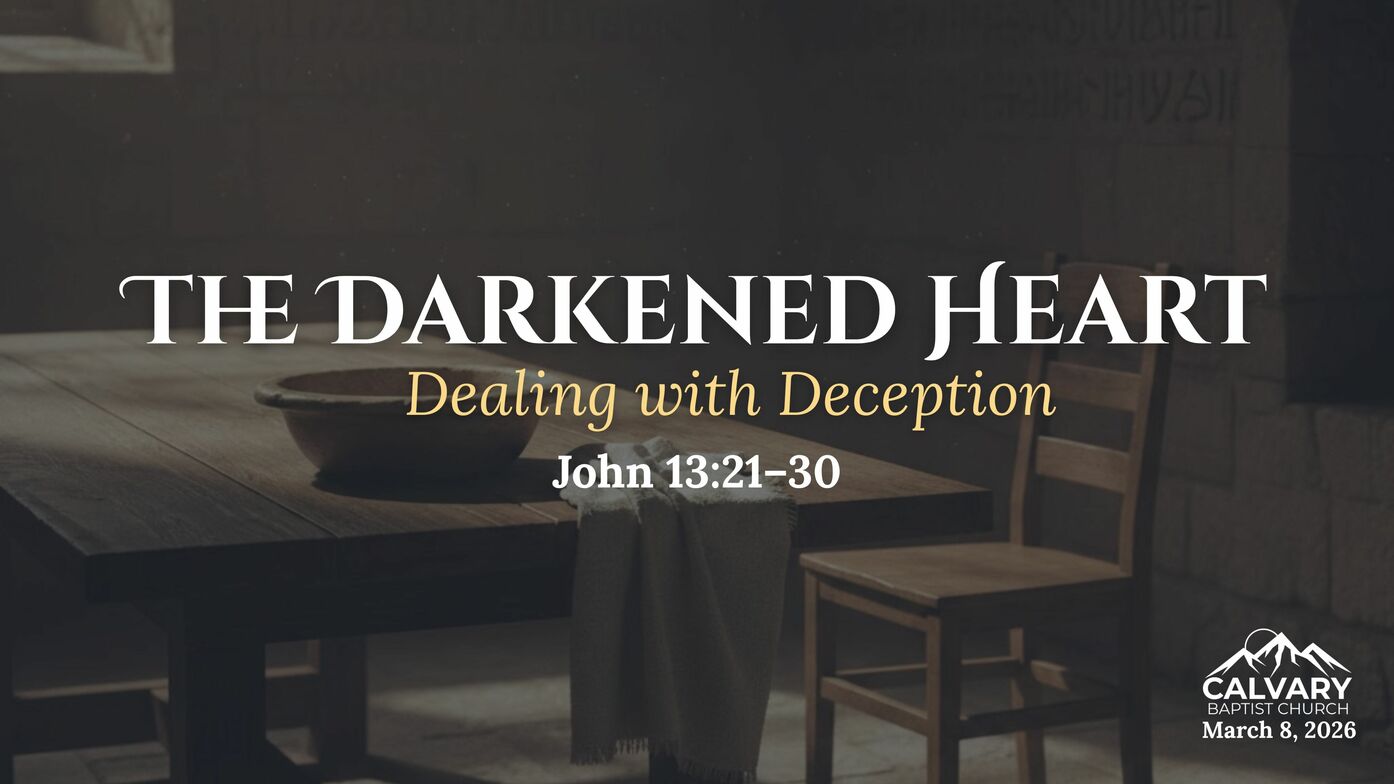
What if the most dangerous place to be was not far from God—but close to Him?
That is the unsettling question raised by a man who ate at the same table as the Son of God, witnessed His miracles, and preached in His name—and still walked out into eternal night. His name was Judas Iscariot, and his story is not a relic of ancient history. It is a mirror held up to every church pew, every Bible study seat, and every heart that has grown comfortable in religious routine.
John 13:21–30 records the final moments before Judas’s betrayal. In the upper room, with the Passover meal spread before them, Jesus makes a stunning announcement—one of His own will hand Him over to His enemies. What follows is a masterclass in how a heart darkens: through unchecked agitation, self-made assumptions, and the tragic finality of a soul given over to darkness.
Three truths from this passage deserve our full and sober attention.
1. Guard Against the Agitation of Your Spirit (John 13:21)
“When Jesus had thus said, he was troubled in spirit, and testified, and said, Verily, verily, I say unto you, that one of you shall betray me.”
— John 13:21 (KJV)
Jesus was troubled in spirit. The Greek word carries the sense of something stirred, shaken, disturbed to its core. This was not weakness—it was the holy response of a perfect mind confronting profound grief and betrayal. And here is the comfort the text quietly offers: your Savior is not a stranger to anguish. He has felt what you feel.
But the greater lesson lies in what Jesus did next. He did not suppress His distress, nor did He wallow in it. He moved from agitation to testimony—from emotional pain to declared truth. That movement is everything.
For the believer, this is both a warning and a model:
- Spiritual agitation is an alarm, not an accusation. Do not ignore it.
- Acknowledge the distress honestly before God. Christ sympathizes with you (Hebrews 4:15).
- Then deliberately move toward truth. Open the Word. Rehearse what God has declared. Do not remain in a troubled state.
Prolonged agitation without movement toward truth is not a neutral condition. It is fertile soil where deception takes root. The restless heart that refuses to bring its anxiety to God becomes vulnerable to every false comfort the world offers.
If your spirit is unsettled right now, that restlessness may be mercy. Do not silence it—respond to it.
2. Reject the Trap of Your Own Suppositions (John 13:22, 29)
“Then the disciples looked one on another, doubting of whom he spake.”
— John 13:22 (KJV)
The word translated “doubting” means to be at a complete standstill—to reach a dead end with no apparent way forward. The disciples were deeply perplexed, and perplexity creates a vacuum. The human mind, desperate for resolution, rushes to fill that vacuum with its own conclusions.
Verse 29 shows us how this plays out: seeing Judas hold the money bag, some disciples assumed Jesus had simply sent him on a supply run for the feast. Their reasoning was not foolish—it was built on real facts. Judas did hold the bag. Jesus did care for the poor. The assumption was logical. It was also completely wrong.
This is precisely how deception operates. It rarely arrives through obvious lies. It comes through plausible explanations that bypass spiritual discernment. The disciples used a true fact to construct a false conclusion, interpreting a spiritual crisis through an entirely carnal lens.
Proverbs 14:12 speaks directly to this dynamic:
“There is a way which seemeth right unto a man, but the end thereof are the ways of death.”
— Proverbs 14:12 (KJV)
Logic without revelation is a map without a compass. You may feel progress, but you are moving in the wrong direction. Consider how easily our suppositions arise:
- A marriage struggles, and we think we already know why—without ever seeking God’s perspective.
- A decision looms, and we reason from circumstances alone—without searching Scripture or seeking wise counsel.
- Someone acts in a way we cannot explain, and we presume their motives—without actually asking them.
The antidote is not more thinking—it is more seeking. Recognize when you are in perplexity. Resist the pressure to immediately resolve every uncertainty with your own conclusions. Go to the Word. Go to prayer. Go to godly counsel. Actively pursue God’s settled truth rather than defending your own suppositions.
3. Heed the Finality of a Darkened Heart (John 13:27, 30)
“He then having received the sop went immediately out: and it was night.”
— John 13:30 (KJV)
Four words carry the weight of eternity: “and it was night.” John is not simply recording the hour. He is marking the spiritual condition of a man who walked out of the presence of the Light of the World and into a darkness he would never leave. Within hours, Judas would betray Christ. Before the next day ended, he would be dead.
Verse 27 tells us that after receiving the piece of bread, Satan entered into Judas. This is not simply temptation from without—it is possession from within. The heart that persistently refuses the light does not simply remain neutral. It is handed over to the darkness it has chosen.
This is the doctrine of judicial hardening. Pharaoh hardened his heart—and then God hardened it. The people described in Romans 1 refused to acknowledge God—and God gave them over to a reprobate mind. Persistent rejection of divine light is not without consequence. There comes a point of no return.
The sobering reality of Judas is not that he was unusual. It is that he was close. He walked with Jesus for three years. He sat at the table. And his physical proximity to Christ meant nothing, because his heart was far away.
You can be in a pew and walking in darkness. You can be at the communion table with a heart that has never been surrendered. Guard your heart, therefore, with all diligence—for out of it flow the issues of life (Proverbs 4:23).
The Anchor Question
In the upper room that night, every disciple heard the same warning. Every one of them felt the same confusion. The difference between Judas and the rest was not knowledge, proximity, or religious involvement. The difference was where each man anchored his heart when darkness fell.
The eleven pressed into Christ. They remained in the Light. Judas went out—and the night swallowed him whole.
Where are you anchored?
Next Step
For the believer:
Set aside 15 minutes this week to do a written heart examination. Ask God to show you where agitation has gone unaddressed, where you have been filling spiritual uncertainty with your own assumptions, and where your outward religious activity may have outpaced your inward devotion. Write down what He shows you—then bring it to Him in confession and prayer.
For the unbeliever:
The door is still open. The Spirit is still convicting. If there is restlessness in your soul, that is not an inconvenience—it is the mercy of God calling you to Himself. Jesus Christ died for sinners and rose again. He calls you to repent and believe. Do not presume on tomorrow. Come to Him today.
Reflection Question
In the areas of your life where you feel the most spiritual uncertainty right now, are you moving toward God’s revealed truth—or filling the silence with your own suppositions? What specific step can you take this week to anchor your heart more firmly to the Word?