No Map Needed

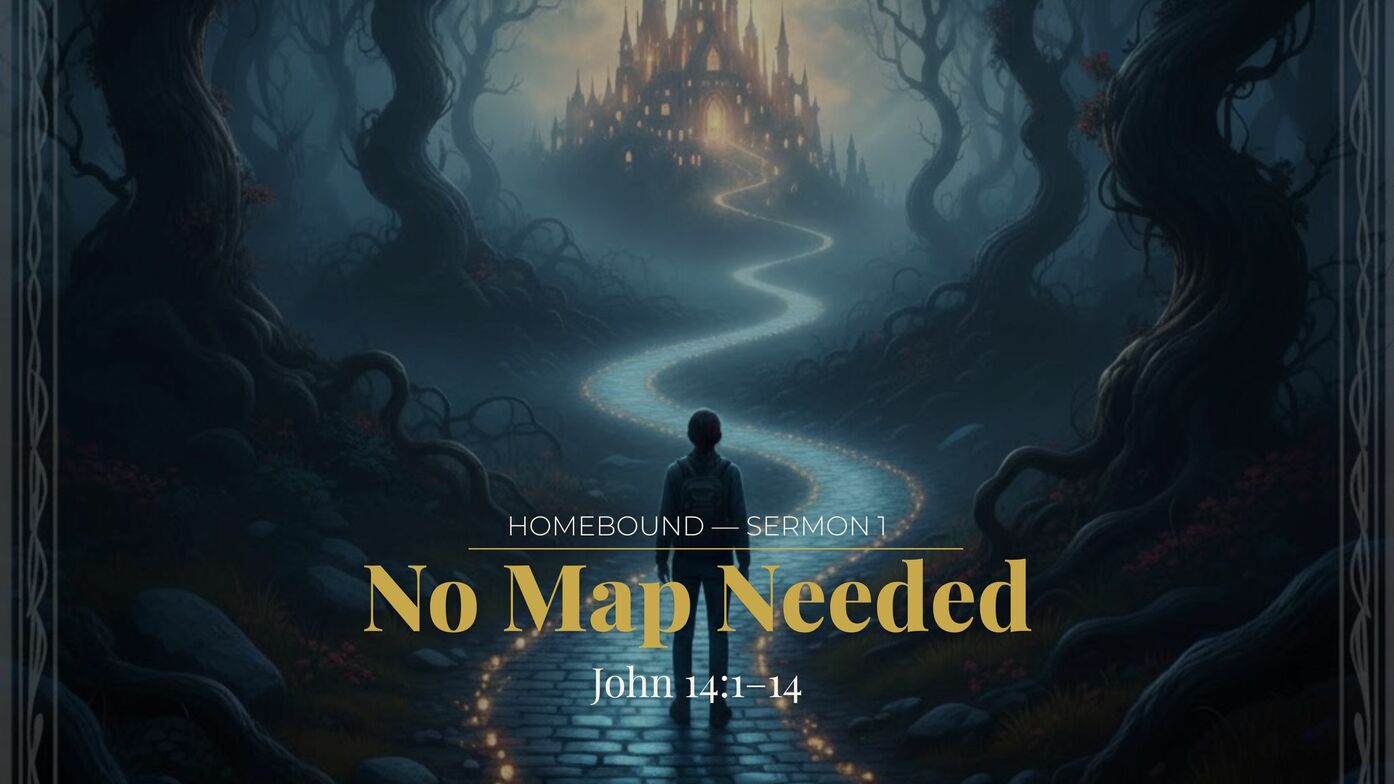
You know that feeling.
You are driving somewhere unfamiliar. It is late. The road looks nothing like it is supposed to look. The directions stopped making sense several turns ago. And somewhere in the middle of all of that, it hits you — you are not where you are supposed to be.
The last thing you want to do is admit it. So you try harder. You squint at the signs. You retrace your steps mentally. You try another route. You exhaust every option before finally conceding what you have known for the last twenty minutes.
You are lost. And you need help.
Now take that feeling and multiply it by everything that actually matters.
Not lost on a road — lost in life. Lost in circumstances that were never supposed to go this way. Lost in a grief with no clear road through it. Lost in a fear about tomorrow that refuses to release its grip today. Lost in a chaos that has shaken the very foundation of everything you built your life upon.
That is not a navigation problem. That is a human problem. And it is the oldest one in the world.
On the night Jesus spoke the words of John 14, the men sitting in front of Him were living that problem in real time. Judas had just disappeared into the darkness. Jesus had been speaking of departure. Everything they had believed about Him — everything they had sacrificed to follow Him — was shaking. Their world was coming apart and they had no idea what to do about it.
They were lost.
And just like us — they were looking for a map.
The Chaos Is Real — And Jesus Knows It
Before Jesus offers a single answer, He does something that reveals everything about His character.
He names the problem.
"Let not your heart be troubled: ye believe in God, believe also in me." — John 14:1
That word troubled in the original Greek — ταράσσω (tarassō) — is not a mild term for mild discomfort. It describes violent agitation, like water being churned in a storm. It covers fear, grief, anxiety, and perplexity — all at once. Jesus is not addressing one dimension of human distress. He is addressing the full catastrophe of the inner life when everything goes wrong simultaneously.
And He addresses it before He explains anything.
This matters for several reasons:
- Christ never offers escapism. He does not promise to remove you from difficulty. He walks straight into it with you.
- He diagnoses before He prescribes. A doctor who names your symptoms accurately before writing a prescription earns your trust. Christ names the inner condition before offering Himself as the remedy.
- His command is not to suppress the trouble but to refuse its mastery. "Let not your heart be troubled" is not a suggestion to think more positively. It is a command — from the One who has authority over both the chaos and the heart — to refuse to let the storm have the final word.
Consider how Jesus treated the lepers. When every other person in society was running away from them, Christ walked toward them. He did what others would not do — He reached out and touched the untouchable. He does exactly the same thing in the upper room. He sees men who are discouraged, perplexed, and shaken to the core — and He does not call upon theology or analyze their emotional state. He steps straight into their chaos and speaks directly to who they are.
He is doing the same thing for you today.
Whatever form your chaos takes — the diagnosis that blindsided you, the relationship that fell apart, the financial pressure that will not let up, the grief that has moved in and refuses to leave — Christ is not surprised by it. He is not disappointed that you are troubled. He is not waiting for you to pull yourself together before He speaks to you.
He walks toward the chaos. Every time.
You Do Not Need a Map — You Need Jesus
Here is where the disciples made the same mistake most of us make.
When the chaos hit, they started looking for directions.
Thomas voiced it plainly:
"Lord, we know not whither thou goest; and how can we know the way?" — John 14:5
It is the most honest question in the passage — and it is the question every human heart asks eventually. Not just which way do I go? but am I even capable of finding the way? The Greek word Thomas uses — δύναμαι (dynamai) — means to be able, intrinsically and absolutely. Thomas is not expressing a temporary information gap. He is confessing a constitutional human incapacity.
We cannot find our way to God on our own terms.
And Jesus does not respond by handing him better directions.
He responds by revealing Himself.
"Jesus saith unto him, I am the way, the truth, and the life: no man cometh unto the Father, but by me." — John 14:6
Four declarations that carry the entire weight of the passage:
- I AM — not I was or I will be, but present tense, absolute, immediate. The same divine name revealed to Moses at the burning bush. Right now. In the middle of the chaos.
- The Way — not a road He knows or a path He has walked, but the means of access and entrance to the Father. You do not travel a road that eventually arrives at Jesus. You travel in Jesus to the Father. He is not the guide. He is the way itself.
- The Truth — not merely a teacher of accurate information, but the personal embodiment of divine reality. Every question about what God is like, what He requires, and what He has done is answered in the person of Jesus Christ.
- The Life — not biological existence but resurrection life, redemption life. The life forfeited in the Garden of Eden, restored in the person of the risen Christ.
This declaration exposes the fundamental problem with every map human beings have ever drawn.
Religious systems, moral codes, self-improvement strategies, and spiritual disciplines are all maps. Some are better drawn than others. But every one of them eventually runs out of road because none of them can do what only a person can do — walk with you, carry you, and bring you all the way home.
The practical implication is direct and uncomfortable: even sincere believers can drift from following Jesus into following a map about Jesus. When navigating chaos becomes primarily about doing the right things, praying the right prayers, and living the right way — that is map thinking. And map thinking, however well-intentioned, substitutes a system for a Savior.
Jesus refuses to be your map. He insists on being your way.
Home Is Real — And Your Room Is Being Prepared
One of the reasons chaos feels so overwhelming is that it makes the destination feel uncertain.
If the future is a fog, the present becomes the whole story. And if the present is full of trouble, hopelessness is a natural result.
Jesus dismantles this directly:
"In my Father's house are many mansions: if it were not so, I would have told you. I go to prepare a place for you. And if I go and prepare a place for you, I will come again, and receive you unto myself; that where I am, there ye may be also." — John 14:2–3
Three things anchor this promise to reality:
- The place is specific. The Father's house has rooms — real, prepared, permanent dwelling places. This is not vague spiritual language. It is the language of a settled, personal, prepared destination.
- The preparation is intentional. The word prepare — ἑτοιμάζω (hetoimazō) — means to make ready. Christ's departure is not loss. It is purposive preparation. He is away getting things ready for your arrival, specifically and personally.
- The return is personal. He does not prepare the place and leave the address for you to find on your own. He promises to come again and receive you unto myself — a word that means to take to one's side, to personally escort. He is coming back to get you.
The chaos of the present moment — however real and however painful — is not the context in which you are ultimately living. You are living in the context of a prepared destination and a certain return. The chaos is the wilderness between here and home.
And home is more real than the wilderness.
The Chaos Lies to You About the Father
Perhaps the deepest fear underneath all human chaos is the fear that no one is actually there.
Philip put it into words:
"Lord, shew us the Father, and it sufficeth us." — John 14:8
The longing behind that request is not wrong. It is the cry of every human heart in every generation — just show me that God is real, that He is present, that there is someone waiting at the end of all of this. Philip has walked with Jesus for three years. He has seen miracles. He has heard teaching that changed everything. And in the middle of the chaos of the upper room, he still feels like the Father is somewhere else — distant, separate, needing to be specially revealed.
Jesus's response is the most tender moment in the entire passage:
"Have I been so long time with you, and yet hast thou not known me, Philip? he that hath seen me hath seen the Father." — John 14:9
The Father has not been absent. He has been visible in the Son all along. Every act of compassion Philip witnessed was the Father's heart in flesh. Every word of truth he heard was the Father's voice made personal. Three years in the presence of Jesus was three years in the presence of the Father — and Philip did not recognize it.
This is precisely what chaos does. It lies to you about God's proximity. It tells you:
- God is far away and hard to find.
- Your situation has pushed you beyond His awareness.
- If He were truly present, things would not be this hard.
- You need a separate, dramatic encounter before you can really know the Father.
Every one of those statements is a lie.
Jesus's declaration — I am in the Father, and the Father in me — describes a permanent, unbroken, continuous indwelling that never varies with circumstances. The compass never drifts because Jesus is in perfect, continuous alignment with the Father at every moment. To follow Christ in the chaos is to be moving directly toward the Father at every step, regardless of how the circumstances feel.
The chaos distorts your perception. The truth remains unchanged.
You Are Not Lost — You Are Homebound
After the upper room, the disciples walked straight into the worst chaos of their lives.
The betrayal was real. The arrest was real. The trial was real. The cross was real. The silence of that Saturday between the crucifixion and the empty tomb was the most profound silence any of them had ever known.
The chaos did not disappear because Jesus had spoken.
But something had changed.
They had stopped looking for a map.
Because they had heard the way, the truth, and the life say — I am going to prepare a place for you. I am coming back to bring you home. Everything you need between here and there I am doing with you and through you and for you.
And then He proved every word of it.
"Verily, verily, I say unto you, He that believeth on me, the works that I do shall he do also; and greater works than these shall he do; because I go unto my Father. And whatsoever ye shall ask in my name, that will I do, that the Father may be glorified in the Son." — John 14:12–13
He went to the cross. He went into the grave. He walked out of that grave on the third day — the way, the truth, and the life — alive and in command of everything that had looked like chaos just seventy-two hours before.
That is the compass available to every person navigating the chaos of this world.
Not a plan. Not a program. Not a religious system or a moral framework. A risen person who is right now preparing a place, answering prayer, doing the work through His people, and coming back to personally bring them home.
You are not wandering without direction.
You are not abandoned in the wilderness.
You are not lost.
You are homebound.
Next Step and Reflection Question
Your Next Step
This week, do a honest waypoint check. Ask yourself one direct question: What have I actually been following — Jesus, or a map of my own making?
If the answer reveals that you have drifted from following Christ into following a religious routine, a self-improvement strategy, or a set of spiritual disciplines disconnected from a living relationship with Him — stop. Lay the map down. Return to the person who said I am the way.
If you have never placed your faith in Jesus Christ, today is the right day. He is not asking you to find your way to Him. He is the way. You do not navigate to Jesus — you surrender to Him.
Bring whatever chaos you are carrying to Him right now, and trust Him with it.
"Let not your heart be troubled: ye believe in God, believe also in me." — John 14:1
Reflection Question
The sermon asked: are you letting the chaos master you, or are you letting Jesus master the chaos? Looking honestly at your life this week — which one is it? And what would it look like to hand the compass back to Him today?