Why You're Unhappy Even Though You Have God's Joy

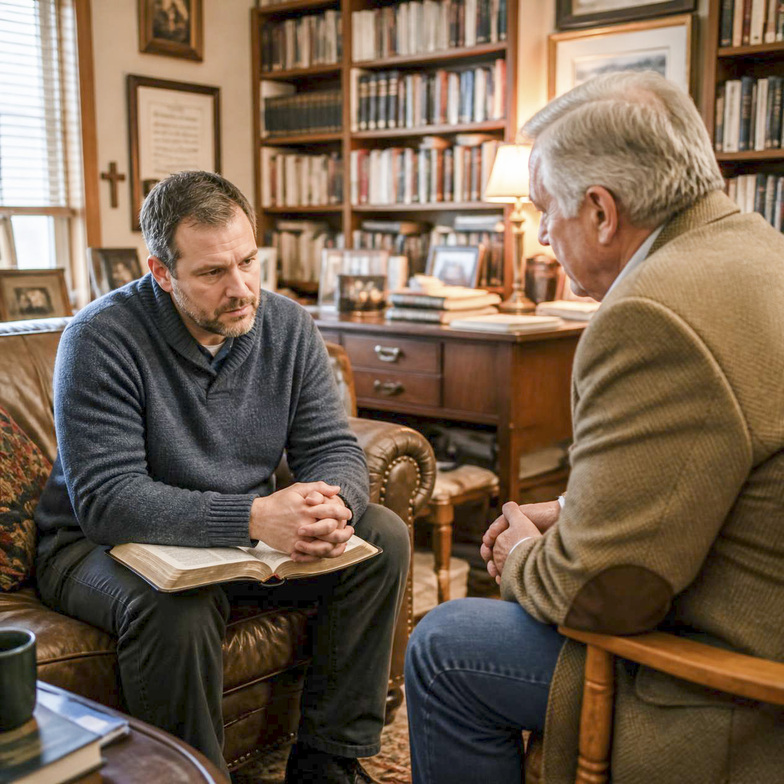
There's a familiar moment in almost every pastor's office. A believer walks in—faithful, prayerful, serving—and says, "Pastor, I feel empty. I don't understand. I'm doing everything right, but I'm not happy."
And you sit there knowing the real problem isn't what they think it is.
They're confusing two completely different things. And that confusion is why their faith feels broken.
The Distinction Jesus Made
Jesus told His disciples something they couldn't wrap their heads around:
"A little while, and ye shall not see me: and again, a little while, and ye shall see me, because I go to the Father." (John 16:16, KJV)
The disciples got hung up on three words: "a little while." That's all they heard. They didn't even ask Jesus directly—they were just talking among themselves, confused. But Jesus knew. He saw what was going on in their hearts before they said a word.
And instead of explaining the timeline, He went somewhere deeper:
"Verily, verily, I say unto you, That ye shall weep and lament, but the world shall rejoice: and ye shall be sorrowful, but your sorrow shall be turned into joy." (John 16:20, KJV)
Notice what He didn't promise. He didn't say your pain would vanish. He didn't say following Him would make your life easy. He was honest: You will weep. You will lament. You will be sorrowful.
But then He made a promise that changes everything: Your sorrow shall be turned into joy.
Not happiness. Joy.
Why the Difference Matters
Happiness depends on what's happening around you. When life goes well, you're happy. When it doesn't, you're not. It's reactive. It rises and falls based on circumstances you can't always control.
Joy is different. Joy comes from believing in something you cannot see—from trusting a Person, not a situation. Joy is a fruit of the Spirit. It's available to you right now, whether your circumstances are falling apart or holding together.
Most of us are waiting for happiness. We're thinking, "Once this gets better, once I see the answer to my prayer, once things make sense—then I'll be able to access whatever joy God has for me."
But that's backwards.
Jesus used an image to help the disciples see it:
"A woman when she is in travail hath sorrow, because her hour is come: but as soon as she is delivered of the child, she remembereth no more the anguish, for joy that a man is born into the world." (John 16:21, KJV)
A woman in labor isn't happy. She's in pain. Real, intense, undeniable pain. But that pain is producing something. It's labor—it's work toward life. And the moment she holds her child, the pain doesn't erase itself. But the sorrow transforms. The joy is so deep that it overwhelms the memory of what it cost.
That's what Jesus was describing. Not that pain goes away. Not that you deny what you've suffered. But that something deeper—something rooted in God—can exist alongside the sorrow and actually transform its meaning.
The Real Diagnosis
If you're unhappy, the problem might not be that you've lost your joy. The problem might be that you're looking for joy in the wrong place.
You pray, and you don't see an answer. So you think: God isn't working. You share your faith, and nothing happens. So you think: This is a waste. You go through loss or illness or fear, and you can't see God anywhere in it. So you think: He's abandoned me.
In each moment, you're measuring God's presence and faithfulness by what you can see. And when you can't see anything, you conclude that nothing is there.
But Jesus is saying something radical: There is work happening that you cannot see.
The Spirit is laboring in your life right now. He's producing transformation you won't recognize until later. He's at work in ways that have nothing to do with your circumstances or your emotions. And He's asking you to trust that He's working, even when you have zero proof.
"And ye now therefore have sorrow: but I will see you again, and your heart shall rejoice, and your joy no man taketh from you." (John 16:22, KJV)
Notice that promise. No one can take your joy. Not your circumstances. Not other people. Not your doubts or your unanswered prayers or your failures. Because your joy doesn't live in any of those things. Your joy is rooted in the only Person who cannot be taken from you.
Reframing Your Invisible Labor
God designed you to work. From the beginning, He put Adam in the garden and said, "Work. Take care of this." Work isn't punishment. It's how we're made.
And your spiritual work—the witnessing, the praying, the daily faithfulness—isn't waste just because you don't see results yet.
I talk to believers all the time who say, "I've been faithful. I've prayed. I've shared my faith. I've served. And nothing changed." And I hear the discouragement in their voice. They're wondering if any of it mattered.
But you're measuring faithfulness by the wrong thing. You're measuring by outcomes. Jesus measures by obedience. By whether you're walking with Him and trusting Him—not whether you can see the fruit.
The fruit might come years later. It might come through someone else's witness. It might not come until eternity. But it's never wasted. Not when it's offered to God, who sees everything, who works invisibly, who is absolutely certain to complete what He starts in you.
The Reimagining
Here's what needs to change: Stop building your joy on what you can see. Start building your joy on who He is.
That's the entire difference. Stop trying to feel happy and start accessing joy. Stop waiting for circumstances to give you permission to be at peace. Stop measuring God's work by visible results.
Instead, place your confidence in His promises. He said He would never leave you. He said He would work all things for your good. He said that the difficulty you're facing now is producing something eternal—something real and unshakeable.
When your joy is rooted in Christ instead of circumstances, something strange happens. You can mourn and rejoice at the same time. You can grieve a loss and possess deep peace. You can be confused about the future and completely secure about the One who holds it.
That's not pretending pain doesn't exist. That's not being strong enough to deny reality. That's the paradox of the Christian life: sorrow and joy can coexist when your joy is rooted in Him and not in what happens around you.