The Finished Foundation

The restaurant was perfect. The ambiance, the service, the presentation—everything looked right. Until the steak arrived slightly undercooked. I watched a man push the plate away, and suddenly none of the excellence that had come before it mattered. One result that didn't meet his expectations erased his confidence in the whole experience.
We live in a results-obsessed culture. A single bad review on social media erases hundreds of five-star ratings. One unanswered prayer creates doubt about whether God is actually good. One diagnosis, one betrayal, one unexpected loss, and we find ourselves questioning everything we thought we knew about His character and care.
It's an old temptation dressed in modern clothes—the same one Satan whispered to Eve in the garden: Are you sure God is who He says He is? Does He really intend good? Can you trust His word?
But before Christ walked toward Calvary, before the nails and the spear and the stone rolled away, He made a declaration that changes everything about how we respond to doubt.
The Declaration That Ends Uncertainty
The night before the cross, Jesus stood with His disciples. He looked to heaven and spoke directly to the Father. In that prayer—in that private moment between God the Son and God the Father—He said words that establish the foundation of everything we believe:
"I have glorified thee on the earth: I have finished the work which thou gavest me to do." (John 17:4, KJV)
Notice the tense. I have finished. Not "I will finish." Not "I hope to complete." He had not yet gone to the cross. He had not yet suffered, died, or risen again. And yet He spoke in the past tense with absolute certainty.
This isn't tentative. It's not conditional. It doesn't depend on future vindication or proof. It's a statement of accomplished fact—declared before the work was visible to anyone but the Father.
Here's what makes this staggering: He was speaking as the God who exists outside time. For Him, the past, the present, and the future happen all at once. When He declared the work finished, He stood at Calvary at the same time. He rose from the dead. He looked across twenty centuries and saw you and me, saw our faith, our struggles, our doubts—and He called them all finished before they ever happened to us.
The cross wasn't an interruption. It wasn't a desperate pivot. The cross was simply the proof of what was already true in the heart of God. It was the visible, historical fulfillment of the finished work.
What "Finished" Actually Means
When we hear that Christ "finished the work," most of us think in consumer terms: the transaction is complete, the service is delivered, the bill is paid. Case closed.
But the work Christ finished wasn't a transaction. It was redemption itself—justification, reconciliation, atonement. The payment for sin. The bridge back to God. The declaration that removes your guilt before a holy God.
This work doesn't wear out. It doesn't need renewal or improvement. It doesn't fail when your circumstances collapse or when you can't feel God's presence. It stands independent of your performance, your feelings, or whether God is currently proving His love through favorable circumstances.
Here's where most of us get stuck: we confuse the finished work of Christ's redemption with the ongoing work of the Holy Spirit's transformation in our lives. They're not the same thing.
The redemptive work—Christ's sacrifice, your justification, the removal of your sin debt—is complete. Done. Finished. You don't add to it. You don't earn it. You don't deserve it. You already have it the moment you believe.
The sanctifying work—the Holy Spirit's transformation of your character, the growth in your faith, the daily wrestling with temptation and sin—that's ongoing. That's the work of a lifetime. That's the Holy Spirit producing fruit in you, shaping you more into Christ's image.
Confusing these two is what crushes believers. It makes you feel like you're never quite enough, like salvation is conditional on your performance, like one more failure might disqualify you from God's love.
But that's not the gospel. That's the treadmill of works-based religion. And Christ declared it finished the night before He proved it at the cross.
The Foundation Test
A master craftsman doesn't apologize for his work. When the foundation is laid, the structure framed, the skilled work complete, he steps back and declares it finished. He doesn't wring his hands and say, "I hope this holds. Please overlook what I might have done wrong."
No. He testifies to what he's built because it's solid.
Christ did the same. He laid a foundation so secure that every believer who trusts in Him can build their entire life on it without fear of collapse.
But most of us are building on multiple foundations. When the market crashes, we're standing on our financial security. When we're betrayed, we're standing on people's loyalty. When our health fails, we're standing on our physical strength. When circumstances shift—and they always do—our foundation shifts with them.
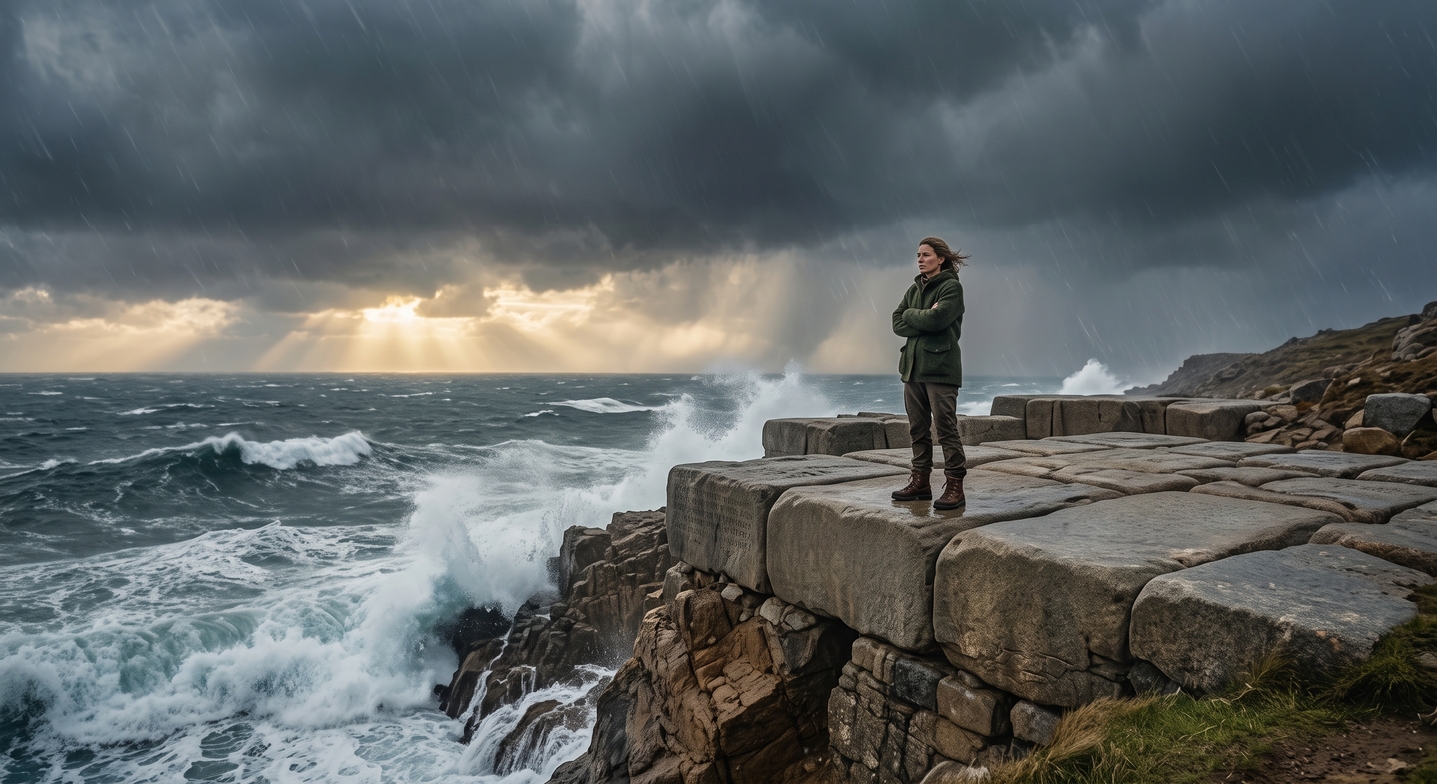
"Therefore whosoever heareth these sayings of mine, and doeth them, I will liken him unto a wise man, which built his house upon a rock: And the rain descended, and the floods came, and the winds blew, and beat upon that house; and it fell not: for it was founded upon a rock." (Matthew 7:24-25, KJV)
The only foundation that holds through every storm is the one Christ finished. Not the foundation of your good works. Not your church attendance or your Bible reading or your moral performance. The foundation of His finished work, offered to you freely, resting entirely on His obedience and power.
When you try to complete what He's already finished—when you labor to prove yourself worthy of salvation, to earn God's love, to do enough good to offset your failures—you're building on sand. You're building on the shifting opinions and metrics of a fallen world.
Why This Matters for Your Mission
Here's what John 17 makes clear: Christ's declaration of the finished work establishes both your identity and your mission.
The disciples didn't change the world because they doubted whether Christ's redemption was complete. They didn't go to their deaths questioning whether the cross had really worked. They lived with settled conviction. The work was done. And that certainty—that security in something already accomplished—enabled them to be bold witnesses.
Doubt makes you defensive. Certainty makes you generous.
When you're trying to complete what's already finished, you're defensive. You're anxious about whether you're doing enough, whether God is satisfied, whether you've finally earned His approval. That anxiety exhausts you. It leaves no room for witness. You're too busy trying to stay above water.
But when you rest in what's finished, everything shifts. You're free. You can look at a broken world and a lost person right in front of you and say: This is what Christ finished for. This is who I'm here to testify to. Not because I'm proving anything, but because this truth is already secure and I get to share it.
Your identity isn't dependent on your performance. Your mission flows from your security, not your striving.
The Stop Sign
A 2024 study found that 43% of American adults reported feeling more anxious than they had the prior year. Anxiety is rooted in demanding proof, needing certainty about outcomes we can't control, insisting that life meet our expectations before we trust again.
But Christ says: Stop waiting for proof. Stop demanding that I validate myself through circumstances. Stop trying to complete what I've already finished. My work is done. My declaration stands. Rest in it.
This is radically countercultural. Our entire economy is built on persuading you that you need something more, something better, something different to finally be satisfied. Social media shows you proof that everyone else has what you lack. Your performance metrics at work, in your body, in your spiritual life—they all whisper that you're not enough, that you need to do more, achieve more, become more.
And the gospel says: You're finished. You can stop now. Not finished growing. Not finished serving. But finished proving.
The work that needed to be done—your redemption, your reconciliation with God, your removal from condemnation—is complete. Christ announced it before the cross. He proved it at the resurrection. Now He asks you to simply believe it.
Your Next Move
If you came to Christ as a new believer, your salvation is secure. You don't doubt it when circumstances get hard. You don't prove it through better behavior or deeper faith. Christ finished it. Rest in that.
If you've been following Jesus for years, you might be tired. Tired of the spiritual treadmill. Tired of trying to complete what was already done on your behalf. The invitation remains: your work is not to finish anything. Your work is to witness to what's finished. To show through your life—not through perfect performance, but through honest dependence—what it looks like to build on a foundation that never fails.
If you're not yet a believer, Christ is inviting you to stop building on sand. Stop proving yourself. Stop demanding the world make sense before you trust Him. Accept what He's finished. Let it become the foundation of everything.
The disciples didn't change the world because they had all the answers or had achieved enough spiritual growth. They changed it because they had encountered a finished, accomplished redemption. They rested in it. And from that rest came boldness.
That's available to you right now.