Better Together at the Table

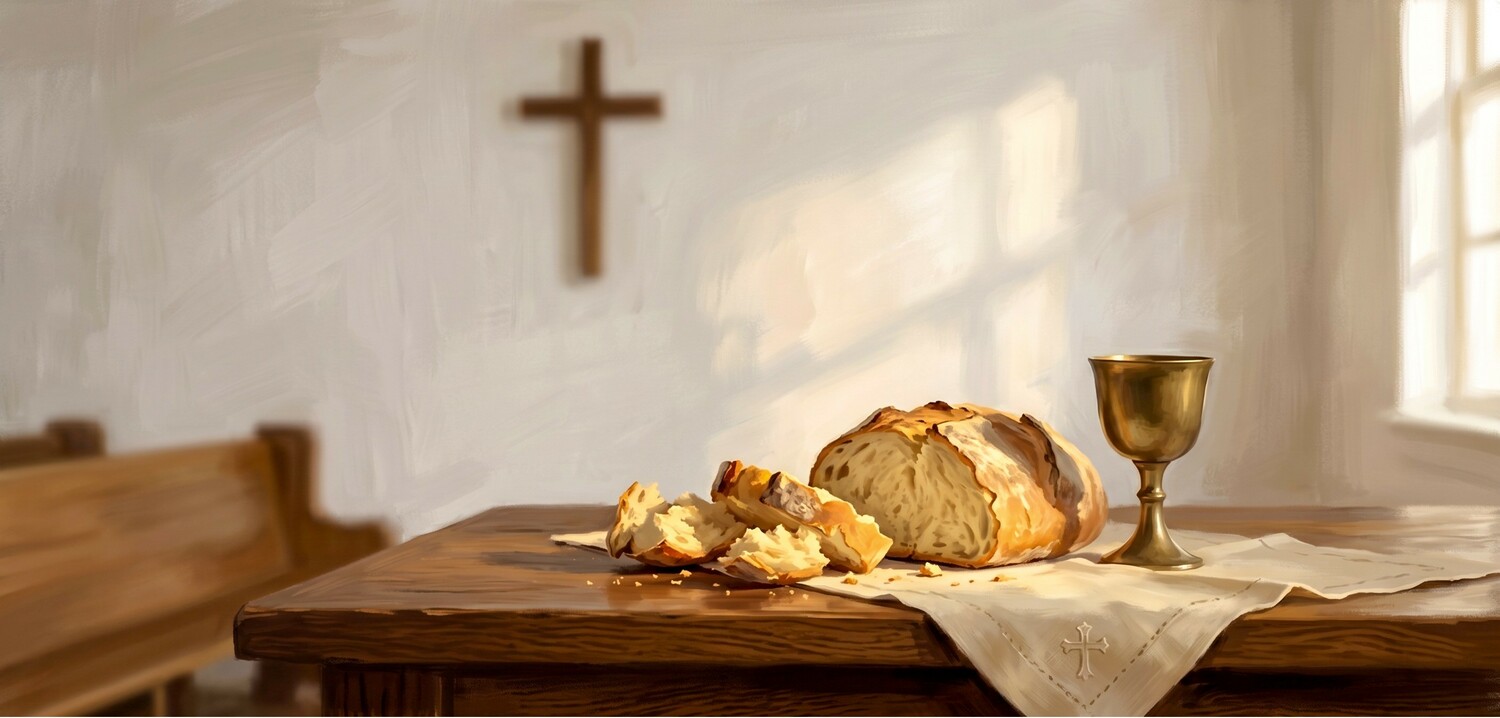
There's a moment in every church service when the bread and cup are passed. Some sit in quiet reflection. Some feel guilt. Some feel excluded. And some—though they'd never say it—feel like they're just going through the motions.
But that moment at the table is far more radical than routine. It's where Jesus asks us to see something we've been taught to miss: the table isn't about you alone with God. It's about all of us, together.
We Before Me
When Paul writes about the Lord's table in 1 Corinthians, he doesn't address individuals. He addresses a we. And he does it over and over, like he's trying to make sure nobody misses it.
The cup of blessing which we bless, is it not the communion of the blood of Christ? The bread which we break, is it not the communion of the body of Christ? For we being many are one bread and one body: for we are all partakers of that one bread. (1 Corinthians 10:16–17, KJV)
Notice what he doesn't say. He doesn't say "the cup I bless" or "the bread I take." He says we. Not because he's being poetic, but because he's correcting something we desperately need to hear. The word communion—that's the Greek koinonia. It's not some abstract spiritual idea. It's something real. Something you actively participate in. Together.
You're not communing with Christ in isolation. You're communing with him in the presence of the body, as part of the body. There's no such thing as private worship at the Lord's table.
Here's an image that helps. Imagine a loaf of bread fresh from the oven. When you slice it, you get pieces—thick ones, thin ones, crooked ones. I know when I slice bread, some slices are always thicker than others. But here's the thing: they all come from the same loaf. That's what Paul is saying about us. We're different. Different ages, different backgrounds, different struggles. But we all come from the same source. We're all part of one thing: the body of Christ.
When you take the table, you're not proving your individual worthiness to God. You're saying something far more important: I belong here. We belong together.
This is what "Better Together" actually means. It's not a catchphrase. It's not motivational language. It's the shape of New Testament faith. We build up one another. We love one another. We carry each other's burdens. We go into our communities together to reach others for Christ. The table was made for togetherness—not because it's nice, but because it's true.
You're Part of a Long Line
But there's something else happening at the table, something we often overlook. You're not starting something fresh every Sunday. You're continuing something that stretches back two thousand years.
Paul gives us the language for this. He says:
For I have received of the Lord that which also I delivered unto you, That the Lord Jesus the same night in which he was betrayed took bread: And when he had given thanks, he brake it, and said, Take, eat: this is my body, which is broken for you: this do in remembrance of me. After the same manner also he took the cup, when he had supped, saying, This cup is the new testament in my blood: this do ye, as oft as ye drink it, in remembrance of me. (1 Corinthians 11:23–25, KJV)
Look at those two words: received and delivered. Paul is describing something like a hand-to-hand passing. I received this from the Lord. I'm handing it to you. And the implication is clear: you're to take what you've received and pass it on to the next person, the next generation, the next believer who needs to know that Christ died and rose again.
This is one of the great gifts of a local church—you have it right here. Grandparents who have walked with Christ for fifty years. Parents in their strength. Young people finding their way. All of you worshiping together, passing something essential from one hand to the next. You're not carrying the faith alone. You're part of a line.
In a world that fragments families and isolates us, a local church that gathers across generations to remember Christ together is a counter-cultural statement. It says: We matter to each other. The faith matters enough to pass on.
Your Partaking Says Something
Here's something that might change the way you approach the table. When you take the bread and cup, you're not just remembering the past in some private, personal way. You're making a public statement.
For as oft as ye eat this bread, and drink this cup, ye do shew the Lord's death till he come. (1 Corinthians 11:26, KJV)
That word shew—it means to proclaim. To declare publicly. So every time you partake, you're saying something without words. You're standing up and saying: "Jesus died. Jesus rose. Jesus is coming back."
Think about that in a hard world. We live in times that press in. There are real griefs, real struggles, real darkness. And yet, when we gather at this table—even in the middle of difficulty—we're declaring something the world tells us is foolish: hope. Not because things are easy. Because Christ conquered death, and his return is certain.
This is a two-thousand-year chain of proclamation. Every generation has sat at a table and whispered the same hope in the same moment. And when you partake, you're joining that. Your presence at the table is your voice, saying to everyone watching: He is worth it. He is enough. He is coming back.
But Be Real About It
Now Paul gets serious. Because the table can become something hollow if we're not careful.
Wherefore whosoever shall eat this bread, and drink this cup of the Lord, unworthily, shall be guilty of the body and blood of the Lord. But let a man examine himself, and so let him eat of that bread, and drink of that cup. For he that eateth and drinketh unworthily, eateth and drinketh damnation to himself, not discerning the Lord's body. (1 Corinthians 11:27–29, KJV)
Before you hear judgment in those words, hear something else: care. Paul is saying the table matters. It's not a formality. It's not something to approach casually or without thought.
But here's what he's not saying. He's not saying you have to be perfect. He's not saying you have to have your life completely together before you're allowed to come. The word unworthily—it's not describing you. It's describing the manner of your approach. The way you come to the table.
None of us are worthy. All of us come because of what Christ did, not because of anything we've accomplished.
What Paul is asking is that you be real. That you examine yourself the way a jeweler examines a stone—not looking for perfection, but for authenticity. Are you real with God right now? Are you honest?
Here are three questions to ask yourself this morning:
- Is there any sin I need to confess? If you're a believer and sin is sitting between you and God, that relationship is broken right now. You haven't lost your salvation. The Holy Spirit hasn't abandoned you. But fellowship is fractured. And God's answer to that is simple: confess it. 1 John 1:9 is your promise—if you confess, he will forgive and cleanse you.
- Is there someone I need to forgive? This one cuts deep. Maybe someone hurt you. Maybe the wound is still fresh. But Jesus—on the cross—suffered infinitely more than any of us can imagine. All he asks is that we extend the same forgiveness we've been given. Don't carry that weight into the table.
- Is my heart fixed on Christ? The world is loud. It pulls you a thousand directions. Entertainment, ambition, worry, distraction. Maybe you've drifted. Maybe you've gone sideways from where you were a year ago. Jesus isn't going anywhere. He loves you. He's asking you to come back. To put your heart back on him.
He's not looking for perfection. He's looking for honesty. Someone willing to be real.
The table matters because Christ matters. And Christ comes to us not through our worthiness, but through our honesty about where we are and our trust in who he is. If you've been staying away from the table—whether out of shame, doubt, or distraction—this is your invitation to come back. Come as you are. Come honestly. Come together with the body of Christ and declare with your very presence: He is enough.